
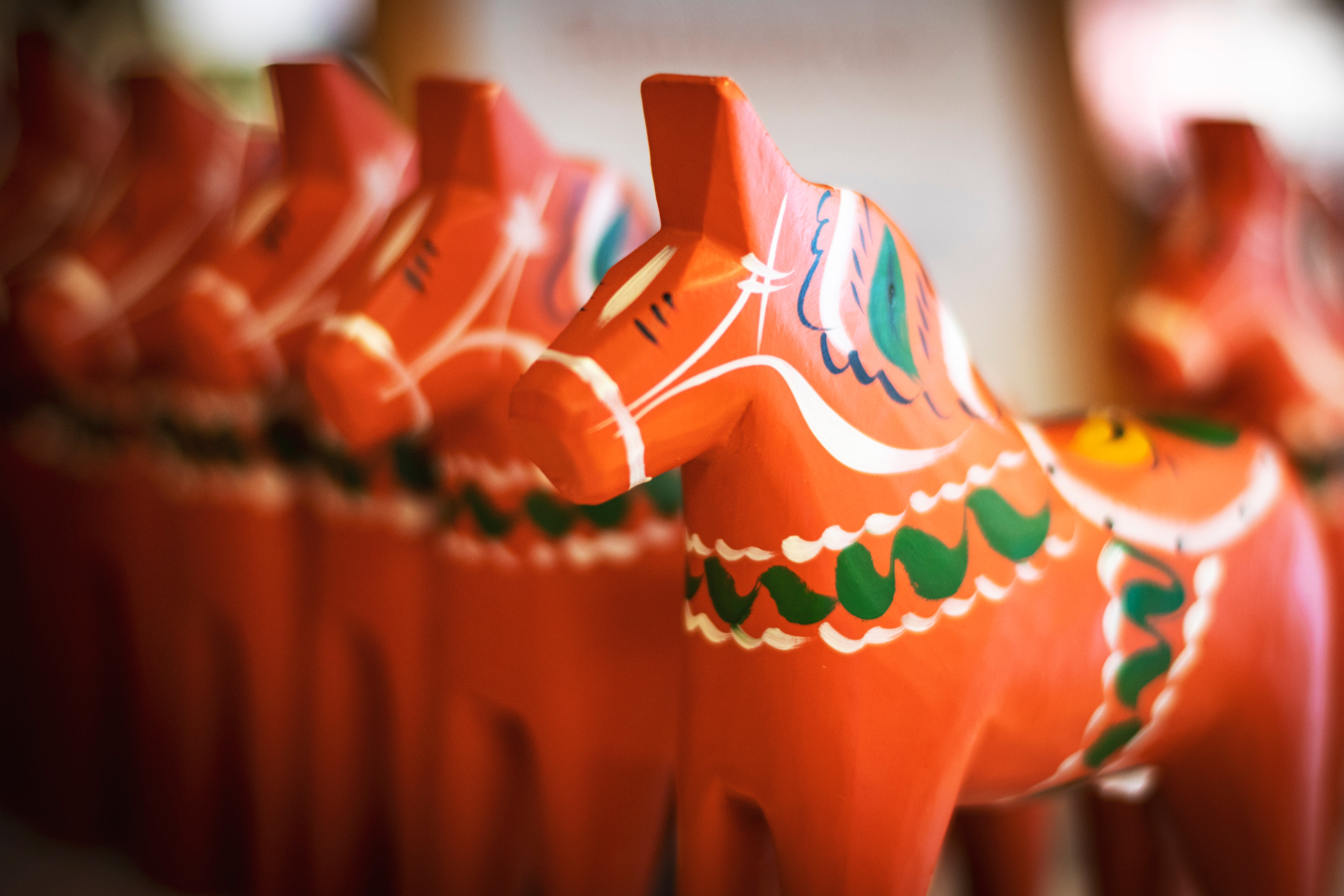
The Dala Horse
Experience the birthplace of Sweden's most beloved symbol — just steps from Muntergården
Sweden's Most Famous Symbol
The Dalecarlian horse — the iconic red wooden horse with kurbits flower patterns — is Sweden's most recognized symbol worldwide. And you're staying just 500 meters from where they've been made by hand for over 200 years.
Nusnäs, the village where Muntergården is located, is the birthplace and heart of Dala horse production. Here, two historic workshops — Nils Olsson Hemslöjd and Grannas A. Olsson — continue the centuries-old tradition of hand-carving and painting these beloved wooden horses.
Nils Olsson Hemslöjd
Founded in 1928, Nils Olsson Hemslöjd is one of the original Dala horse workshops. Watch skilled craftspeople carve horses from solid pine, then paint them using the traditional kurbits technique — each stroke applied by hand, each horse unique.
- Workshop tours with live demonstrations
- Extensive shop with horses in all sizes
- Paint-your-own Dala horse activities
- Museum section on Dala horse history
Grannas A. Olsson
Just across the road, Grannas A. Olsson has been crafting Dala horses since the 1920s. This family-owned workshop maintains strict traditional methods — every horse is still carved by hand from local pine and painted with time-honored patterns.
- See carvers and painters at work
- Factory shop with wide selection
- Traditional and limited edition designs
- Shipping available worldwide
The History
Dala horses date back to the 17th century, when woodworkers in the long, dark winters carved toys for children. Over time, the horses developed their distinctive style — the proud posture, the kurbits flower decorations, the bold Falu red color (from the same paint that colors Swedish houses).
The 1939 World's Fair in New York made the Dala horse internationally famous when a giant horse represented Sweden. Today, the little wooden horse is a universal symbol of Swedish craft, tradition, and design.
Why Nusnäs?
The tradition concentrated in Nusnäs because of the abundant pine forests, the long winters that encouraged indoor crafts, and the skill that developed over generations. Staying at Muntergården means staying in the living heart of this tradition — a village where Dala horse crafting isn't a tourist attraction, but simply what people do.
🐴 Visitor Tips
- Both workshops are a 5-minute walk from Muntergården
- Best times to see craftspeople: weekday mornings
- Closed on Sundays and some holidays
- Paint-your-own activities — book ahead in summer
- Prices vary widely by size — smallest from ~100 SEK
- Authentic horses have maker's marks on the bottom
Explore More Activities
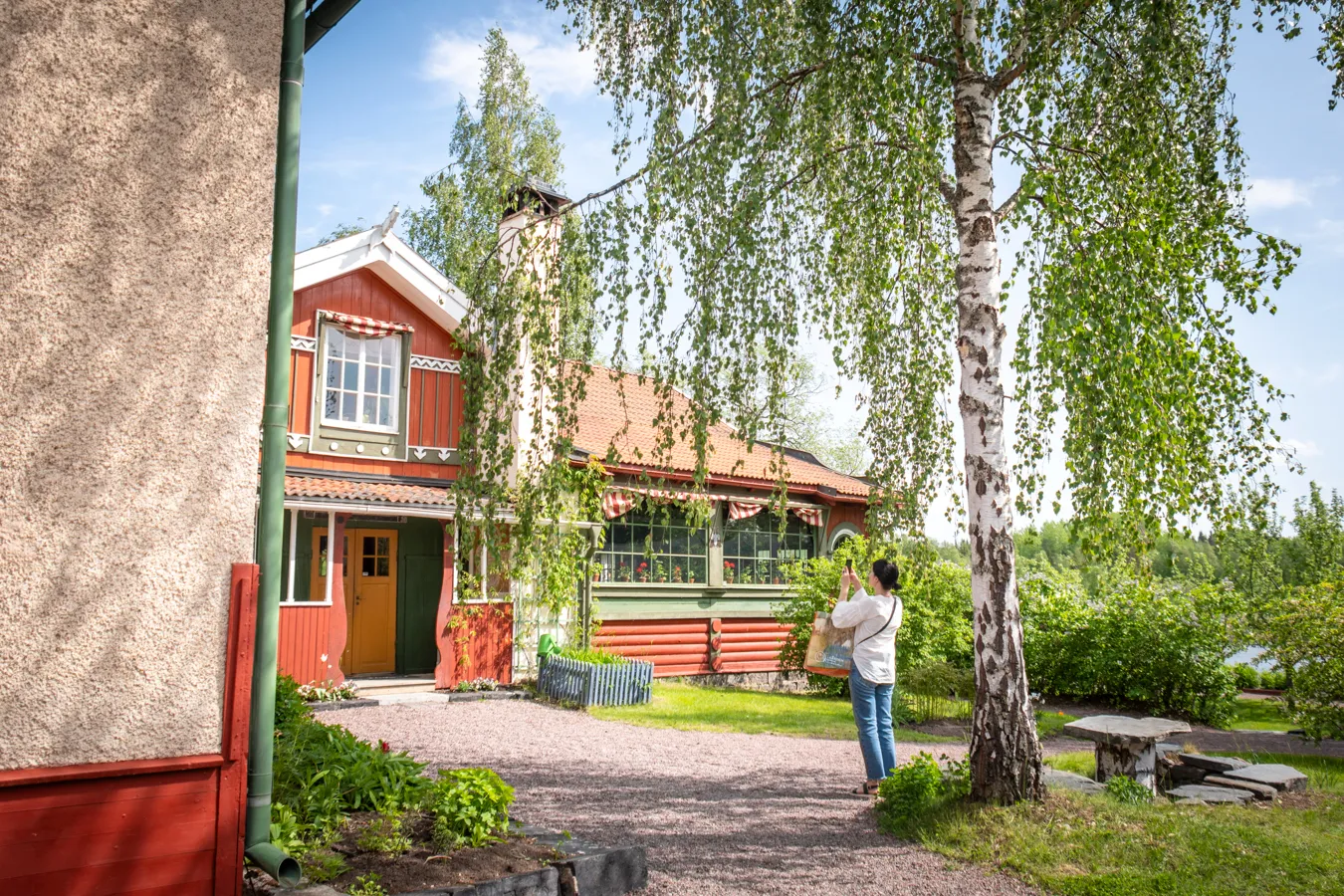
Carl Larsson-gården
The iconic home of artist Carl Larsson in Sundborn — birthplace of Swedish interior design.
Learn more →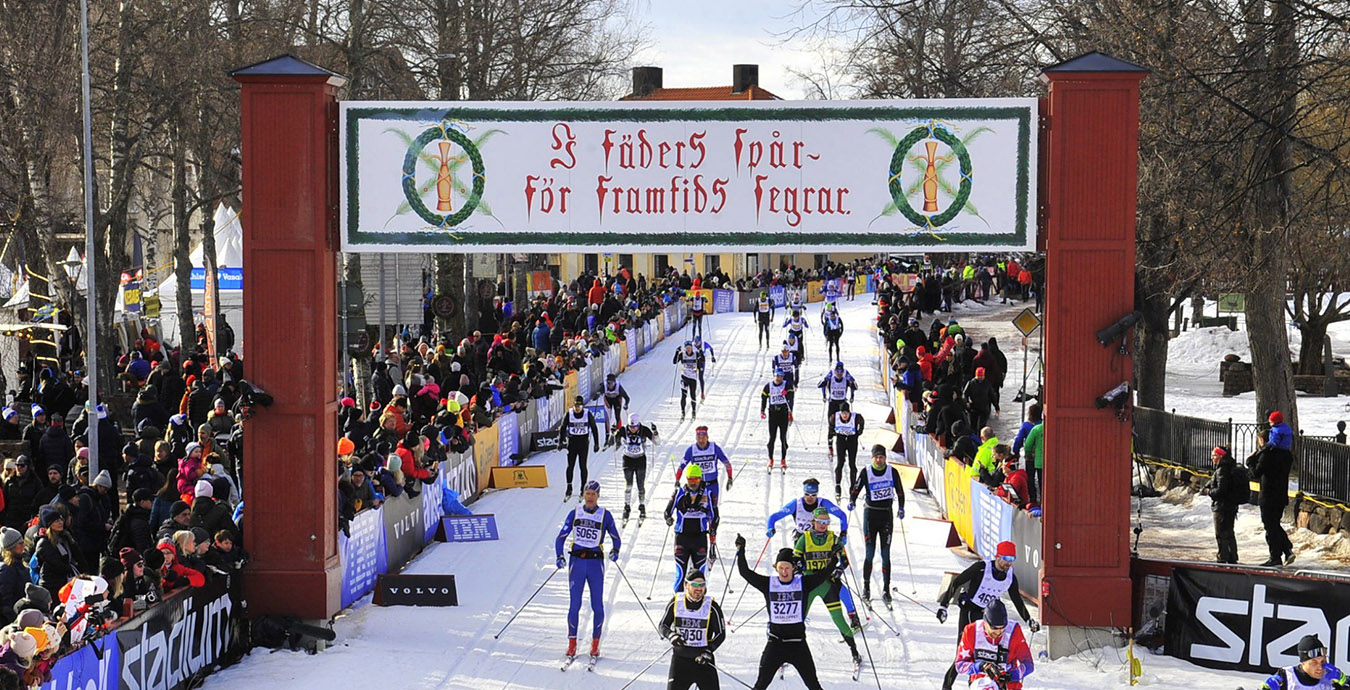
Vasaloppet
The world's largest cross-country ski race finishes in Mora, just 10km away.
Learn more →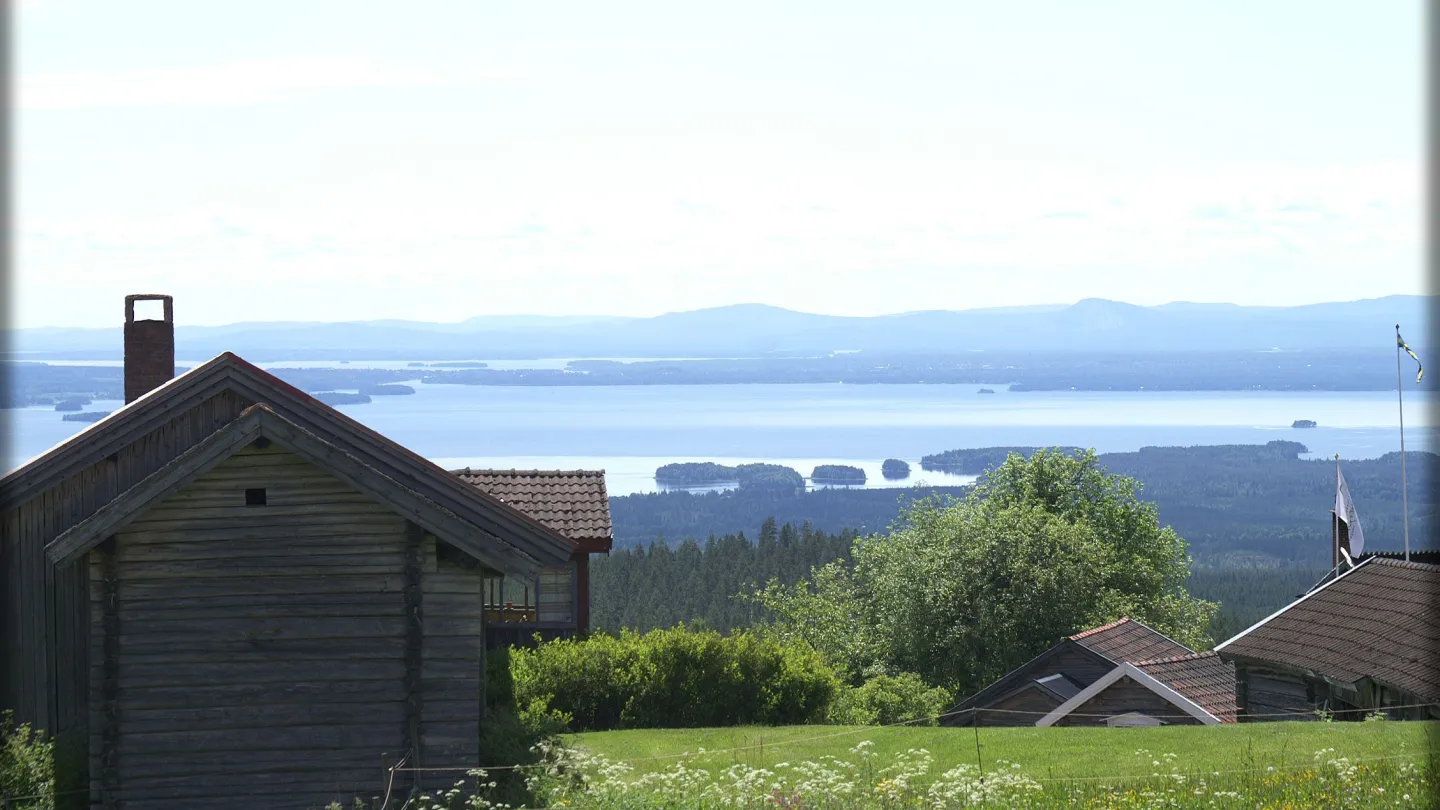
Smidgården
Mountaintop restaurant in a historic fäbod with panoramic views.
Learn more →Stay in the Heart of Dala Horse Country
Muntergården puts you steps from Sweden's most iconic craft tradition.